
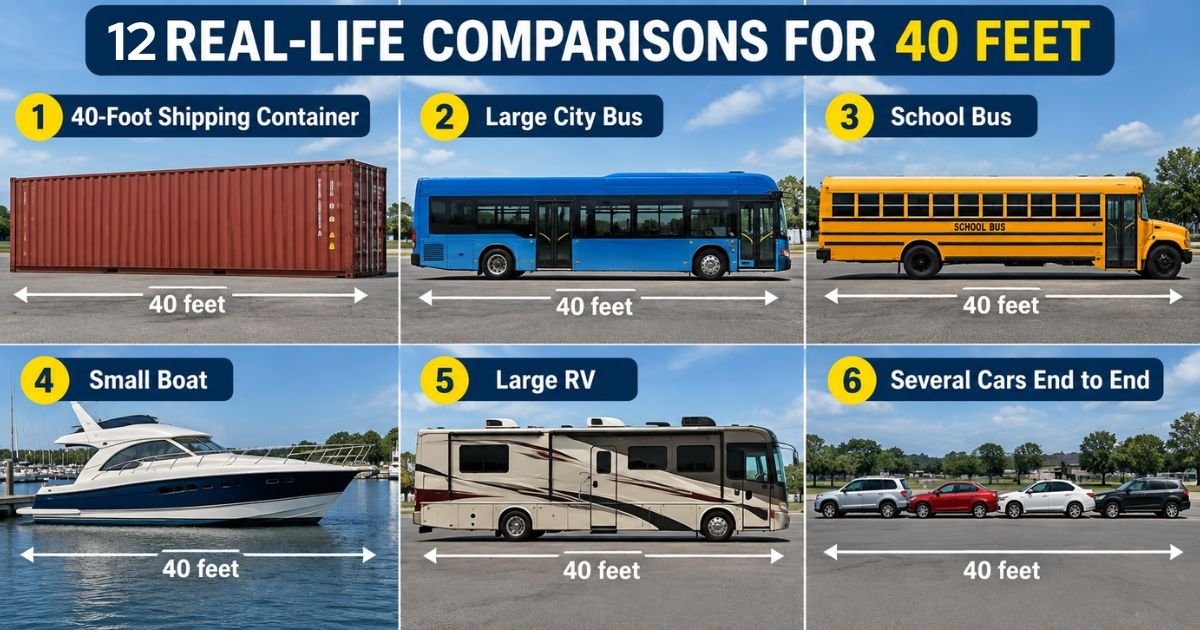
Standing in an open space, you might think you can judge distance easily. Then you try to estimate 40 feet and suddenly it feels confusing. You start wondering, how long is 40 feet exactly?
That’s because your brain doesn’t store measurements. It stores experiences. You remember the size of a bus, the height of a tree, or the distance across a road not a number on a tape measure.
To put it simply, 40 feet equals 480 inches or 12.192 meters. But numbers alone don’t help you picture the actual size. So, what does 40 feet look like visually? Imagine a long stretch of space in front of you about the length of a large shipping container or a full-size bus and compare it with everyday objects you already know.
This guide focuses on those real references. Instead of memorizing numbers, you’ll connect 40 feet to things you’ve already seen. In this guide, you’ll find 10 real-life comparisons that make 40 feet easier to visualize, measure, and remember in everyday situations.
How Long Is 40 Feet? Quick Breakdown
| Measurement | Equivalent |
|---|---|
| 40 feet | 480 inches |
| 40 feet | 13.33 yards |
| 40 feet | 12.192 meters |
| 40 feet | 1,219.2 centimeters |
40 feet is equal to 480 inches, 13.33 yards, or 12.192 meters. In simple terms, it’s a little longer than 13 yards and stretches across a noticeable distance.
If you laid 40 feet out in a straight line, it would cover more space than most rooms or small driveways. It’s long enough to make the measurement feel significant, even without being difficult to walk.
For a quick mental reference, imagine dividing 40 feet into four equal 10-foot sections. Putting those sections together gives you the full length of 40 feet.
How Long Is 40 Feet Visually?
So, how long is 40 feet visually? Picture a straight line stretching across an open area, with enough distance to take several normal walking steps from one end to the other.
A 40-foot distance can be easier to understand when you compare it with familiar objects. For example, a 40-foot shipping container gives you an almost exact real-world reference for this length.
The key is to stop thinking about 40 feet as just a number. Once you connect it to buses, containers, vehicles, driveways, or other familiar objects, 40 feet becomes much easier to picture and remember.
10 Real-Life Comparisons for 40 Feet
1. 40-Foot Shipping Container
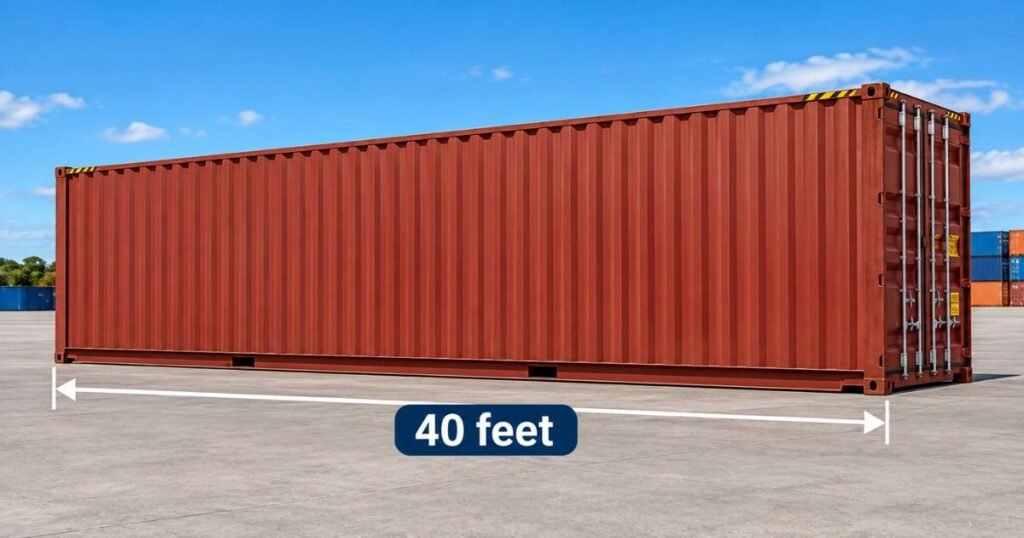
A 40-foot shipping container is one of the easiest ways to understand the length. If you’re wondering how long 40 feet is visually, picture a container stretching across the ground. Its standardized length gives you a practical reference for the measurement.
These containers carry goods across ships, trains, and trucks around the world. Their large interior also makes them useful for storage, workshops, temporary offices, and construction sites. Seeing one in person can make the idea of 40 feet long much easier to understand.
The modern shipping container transformed global trade during the 20th century. American trucking entrepreneur Malcolm McLean helped popularize standardized containers in the 1950s. This system reduced cargo handling time and helped create the efficient shipping network used today.
2. Large City Bus
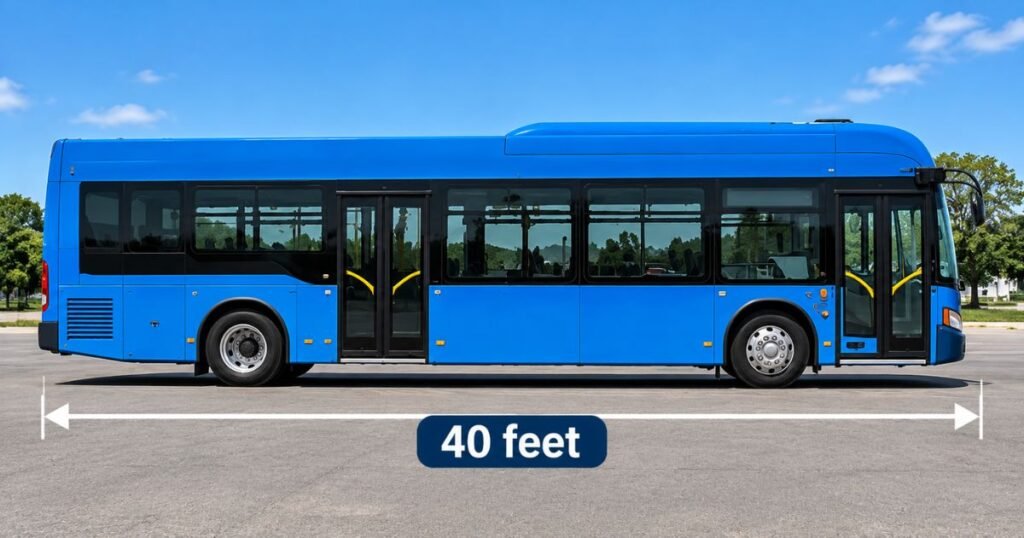
A large city bus can give you a strong visual sense of 40 feet. Many full-size transit buses are close to this length, although their exact dimensions vary. Standing beside one makes the distance easier to understand than simply looking at 40 feet on a ruler.
City buses use their long bodies to transport many passengers through busy urban areas. The extra length provides space for seats, standing areas, multiple doors, wheels, and mechanical equipment. That makes a large bus a useful real-world comparison for 40 feet.
Motor buses became common in major cities during the early 20th century. They gradually replaced many horse-drawn bus services as engines and road networks improved. Over time, longer buses became important for carrying growing numbers of passengers through crowded cities.
3. School Bus

A full-size school bus can also help you visualize how long 40 feet is, although not every school bus reaches exactly 40 feet. When you picture a long school bus from front to back, the overall shape gives you a familiar reference for understanding this distance.
School buses need enough length to carry students safely and comfortably. Their design provides room for rows of seats, emergency exits, doors, safety equipment, and the vehicle’s mechanical systems. The long body helps transport many students in a single trip.
The school bus has a long transportation history, but its modern form developed during the 20th century. In the United States, school transportation standards became more organized over time. The familiar National School Bus Yellow standard was established in 1939.
50 Pounds: 11 Things That Weigh 50 Pounds
4. Small Boat
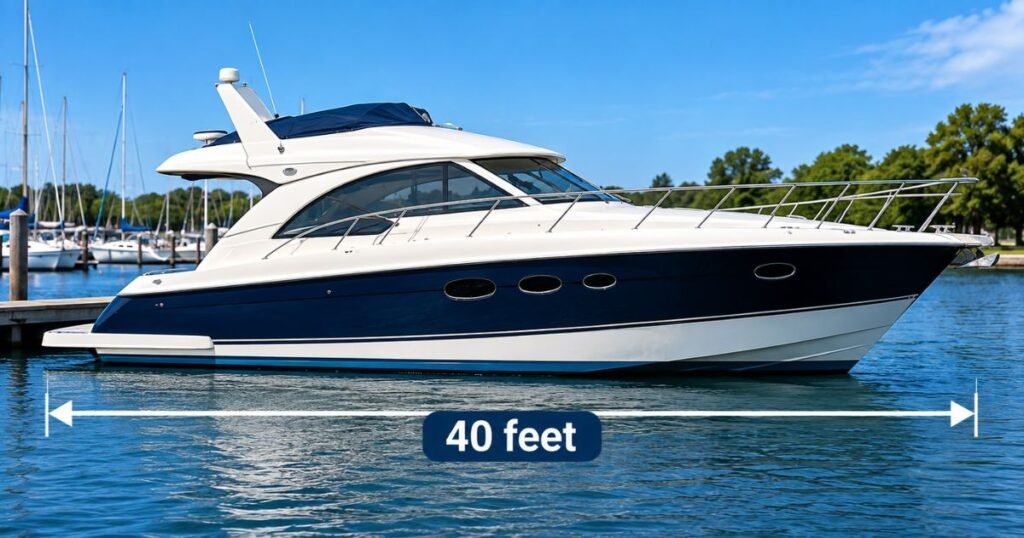
A small boat around 40 feet long can make this measurement easier to picture, especially if you’ve seen boats at a marina. Instead of thinking about an abstract number, imagine walking from the bow to the stern of a vessel that stretches roughly 40 feet.
Boats in this size range can serve many purposes, including fishing, cruising, transportation, and recreation. Depending on the design, they may include sleeping areas, seating, storage, engines, kitchens, or enclosed cabins. Their length gives designers useful space without making them extremely large.
People have built boats for thousands of years, but modern boat design changed dramatically with new materials and engines. Fiberglass became especially important after World War II. It allowed manufacturers to build strong recreational boats more efficiently and helped expand the boating industry.
5. Large RV
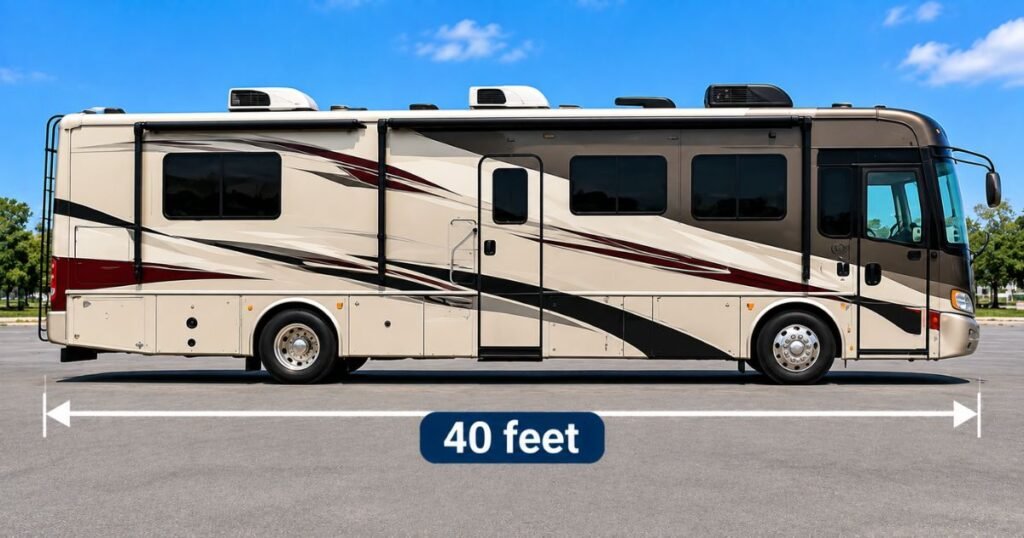
A large recreational vehicle can also provide a useful 40-foot comparison. Some larger motorhomes approach or reach this length, giving you a familiar way to picture a long vehicle. If you’re asking what 40 feet looks like, imagine a home-like vehicle stretching nearly the length of a bus.
Large RVs combine transportation and living space in one vehicle. They can include bedrooms, bathrooms, kitchens, dining areas, storage, and entertainment spaces. Their long design gives travelers more comfort while allowing them to take those facilities on road trips.
The recreational vehicle industry developed rapidly during the 20th century. Early motorhomes grew from simple camping vehicles into larger mobile living spaces. By the later decades of the century, RVs had become popular for family travel, long road trips, and extended outdoor recreation.
6. Several Cars End to End
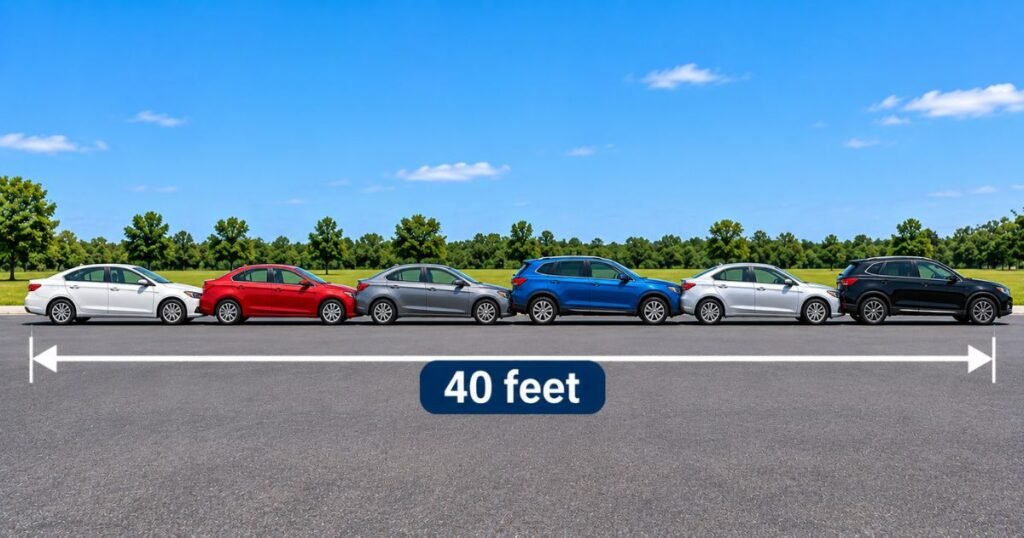
Several cars lined up bumper to bumper can help you understand how long 40 feet is visually. Depending on the size of each vehicle, around three to four cars can approach this length. It’s a simple comparison because most people can picture a car more easily than a 40-foot measurement.
The exact number depends on the vehicles you choose. Three large cars may stretch close to 40 feet, while smaller cars may require four or more. This comparison works best when you think about the cars forming one continuous line from the front of the first vehicle to the back of the last.
Cars have changed dramatically since the first practical automobiles appeared in the late 19th century. Early vehicles were much smaller and simpler than many modern cars. As automobiles became common, manufacturers developed different body sizes to serve families, businesses, and transportation needs.
7. Long Driveway
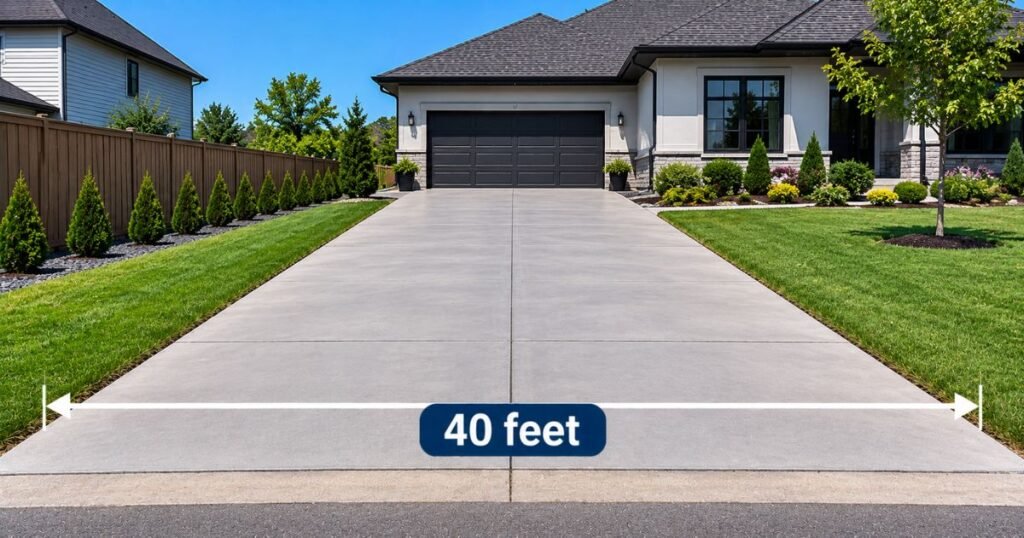
A long driveway can give you a practical sense of 40 feet long without needing specialized equipment. Picture a driveway extending from a house toward the street for roughly 40 feet. Walking along it can make the distance feel much more tangible than seeing the number alone.
Driveways provide access between a property and the public road. Their length depends on the home’s layout, garage position, property size, and local design. A 40-foot driveway can provide enough room for vehicles to approach, park, turn, or connect a garage with the street.
Residential driveways became increasingly common as private car ownership expanded during the 20th century. Before automobiles became widespread, many homes relied on paths or carriage access instead. The growth of suburban neighborhoods and automobile travel made dedicated driveways a normal part of modern homes.
8. Residential Lap Pool Length
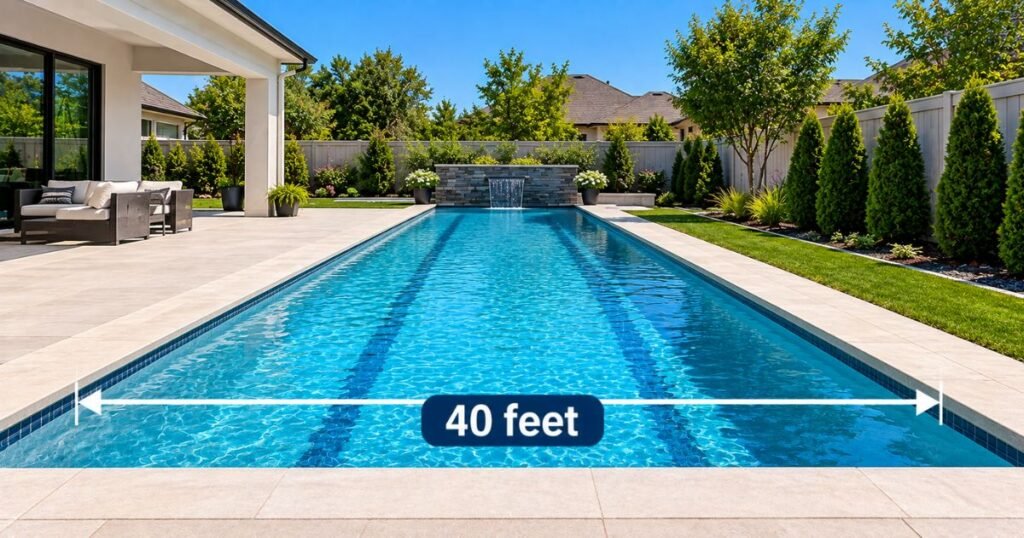
A residential lap pool can help you picture 40 feet because its long, narrow shape makes distance easy to follow. If a pool measures around 40 feet from one end to the other, swimming across it gives you a direct sense of the measurement in real life.
Lap pools are designed primarily for swimming rather than simply relaxing or playing. Their length gives swimmers room to practice continuous strokes and turns. A 40-foot pool is shorter than many dedicated competition pools, but it can still provide useful space for exercise at home.
Swimming pools have existed for thousands of years, with some of the earliest known examples dating back to ancient civilizations. Modern recreational and competitive pools developed much later. As swimming became a popular sport and fitness activity, private lap pools became more common in residential properties.
9. Part of a Bowling Lane
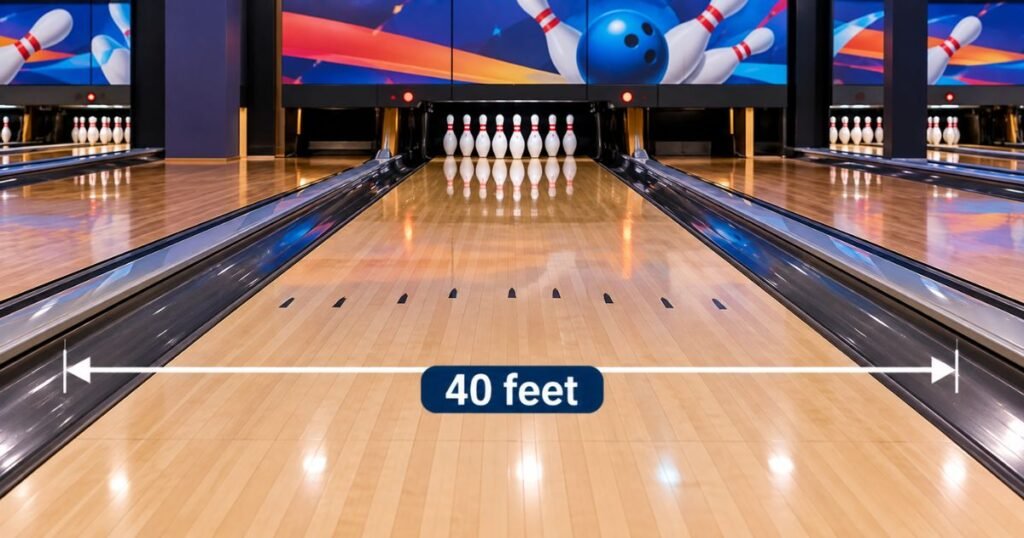
A bowling lane offers another interesting way to understand 40 feet visually. A standard lane is considerably longer than 40 feet, so 40 feet represents only part of the playing surface. This comparison helps you judge the distance against something many people recognize.
A bowling lane includes the approach area, lane surface, gutters, and pin area. Its carefully controlled dimensions allow players to repeat the same type of throw from one game to another. Thinking of 40 feet as a portion of the lane makes the measurement easier to visualize.
Bowling has ancient roots, with forms of the game appearing thousands of years ago. Archaeological evidence suggests that people played early bowling-like games in ancient Egypt. Modern ten-pin bowling developed much later and became especially popular in the United States during the 19th and 20th centuries.
10. Tall Utility Pole
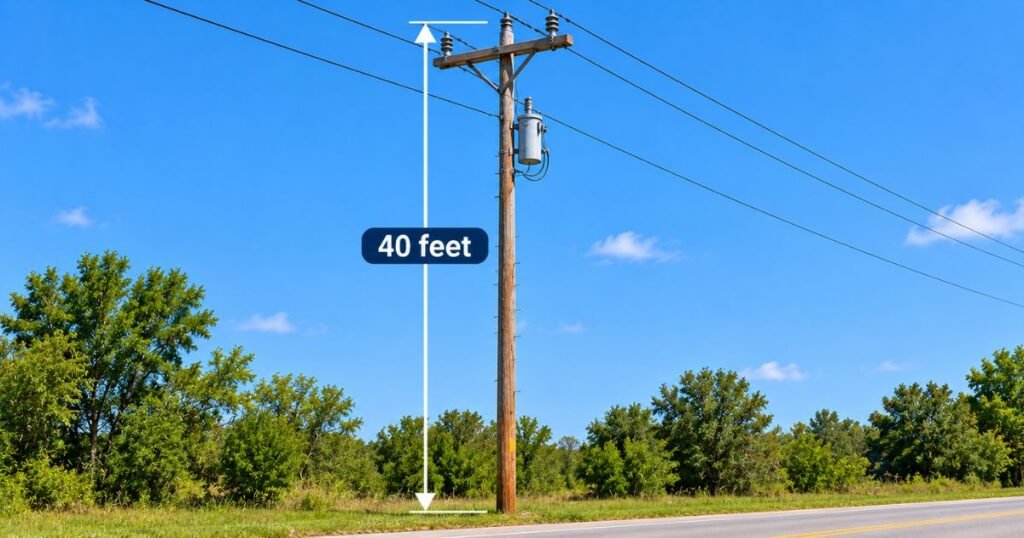
A tall utility pole can help you visualize what 40 feet looks like vertically. Some utility poles reach around this height, although their exact dimensions vary by location and purpose. Looking upward at a pole can make 40 feet feel surprisingly tall compared with seeing the same distance horizontally.
Utility poles support electrical wires, telephone lines, communication equipment, and other infrastructure. Their required height depends on road clearance, wire placement, terrain, and safety standards. A pole around 40 feet high can therefore give you a useful reference for understanding vertical distance.
Wooden utility poles became increasingly important as electrical and telephone networks expanded during the late 19th and early 20th centuries. Early electrical systems needed reliable structures to carry overhead wires. Over time, utility poles became a familiar part of streets and rural landscapes.
11. Small Building or Structure
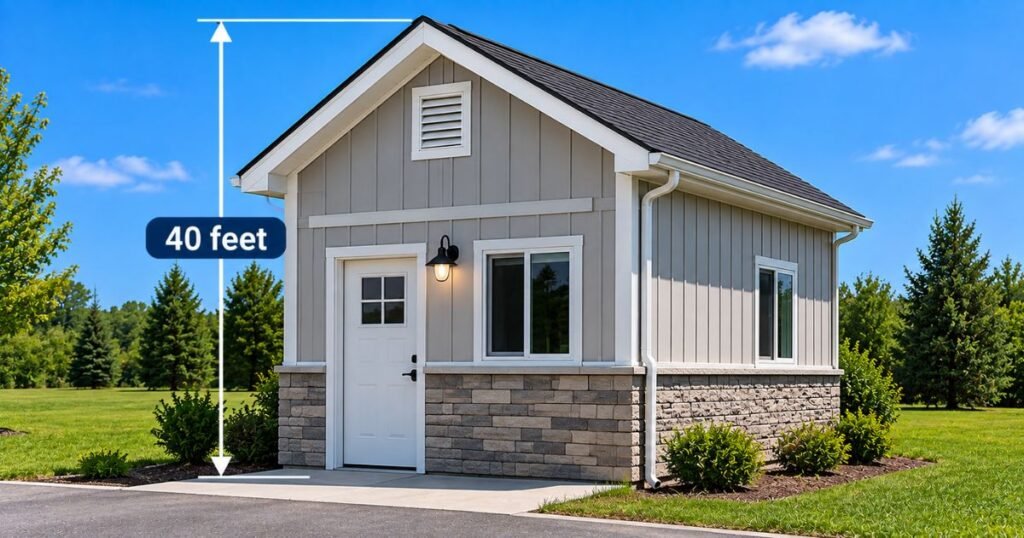
A small building or structure around 40 feet high can make the 40-foot height comparison easier to understand. Looking at several levels of a building gives you a visual reference that is more intuitive than imagining a measurement in empty space.
A 40-foot structure could include multiple stories, depending on ceiling heights and architectural design. Buildings use vertical space for homes, offices, storage, shops, and other purposes. Comparing 40 feet with a structure also helps explain why the measurement can feel much larger when viewed upward.
Buildings have used vertical space for thousands of years, from ancient homes to monumental structures. Construction methods gradually improved through stonework, timber framing, steel, and reinforced concrete. Modern building technology now allows structures to reach heights that were once difficult to achieve.
12. Semi-Trailer Container Unit
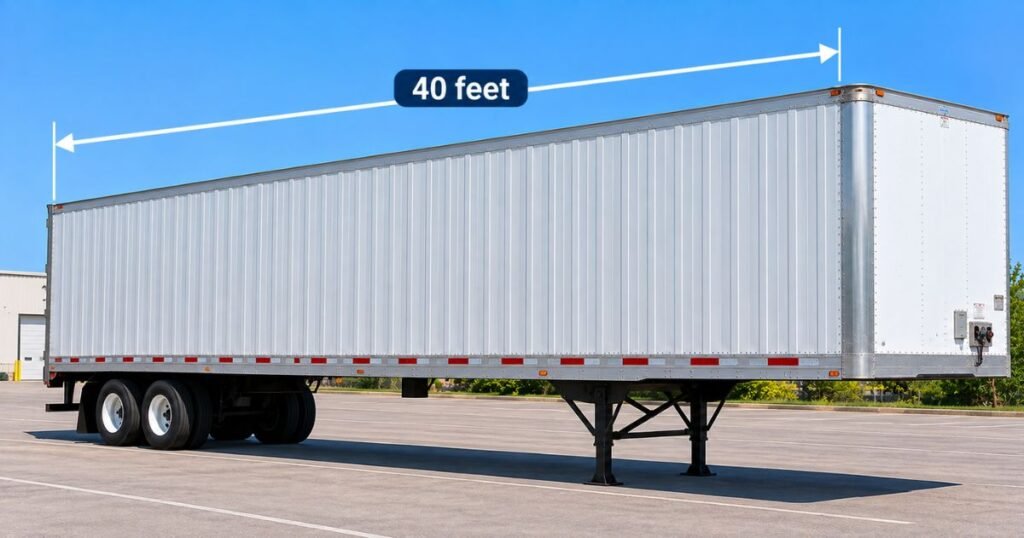
A semi-trailer carrying a container provides another practical way to understand 40 feet long. A common 40-foot container can sit on a trailer and travel between ports, warehouses, rail terminals, and distribution centers. Seeing the full unit makes the measurement easier to picture.
These trailer and container systems connect different parts of the transportation network. Trucks move containers between ships, railways, warehouses, and businesses without unloading every individual package. This flexibility saves time and makes long-distance freight movement more efficient.
Containerized freight changed transportation during the 20th century. Standardized containers made it easier to transfer cargo between ships, trains, and trucks. The widespread adoption of this system helped reduce handling costs and played a major role in the growth of modern global trade.
What Does 40 Feet Tall Look Like?
When you picture 40 feet tall, think vertically rather than horizontally. A 40-foot height is roughly comparable to a small four-story structure, depending on floor height. Looking upward across that distance can feel much more impressive than seeing 40 feet stretched along the ground.
The biggest difference is how your eyes experience the measurement. Forty feet long can look like a long stretch of ground, while 40 feet high requires you to look upward. This makes 40 feet high feel taller and harder to judge without a familiar reference.
For a simple mental picture, imagine standing beside a structure that rises several stories above you. You can also picture a tall utility pole reaching overhead. These references make what is 40 feet tall much easier to understand than a number alone.
How Can You Measure 40 Feet?
You don’t always need a measuring tape to estimate 40 feet. One simple method is walking the distance and counting your steps. Since everyone’s stride differs, this gives you a rough estimate rather than an exact measurement.
Another easy method is to divide the distance into four 10-foot sections. You can also use a measuring wheel when accuracy matters, especially across yards, driveways, construction areas, or other open spaces where a tape measure becomes inconvenient.
If you already know the length of a familiar object, you can use it as a reference. For example, a known vehicle or 10-foot section can help you estimate the remaining distance. For precise work, however, use a proper measuring tool rather than relying on visual estimates.
40 Feet vs. 40 Square Feet
40 feet and 40 square feet describe completely different measurements. Forty feet measures length, while 40 square feet measures area. This difference matters when you’re comparing distances with rooms, floors, yards, or other spaces.
For example, a rectangular area measuring 5 feet by 8 feet equals 40 square feet. That space has an area of 40 square feet, but neither of its sides is 40 feet long. The number sounds similar, but the measurement describes something completely different.
A useful way to remember it is simple: feet tell you how long, while square feet tell you how much surface area. If you’re searching for how long 40 feet is, you’re looking for a distance. If you’re searching for 40 square feet visually, you’re trying to understand the size of an area.
Frequently Asked Questions
What is something that is 40 feet long?
A 40-foot shipping container is one of the clearest examples because its standard length is designed around 40 feet. Large buses, some boats, RVs, and other long vehicles can also provide approximate comparisons, depending on their specific dimensions.
What does 40 feet look like?
Forty feet looks like a substantial distance when stretched across the ground. You can picture it as four 10-foot sections placed end to end, or compare it with familiar objects such as a 40-foot shipping container to make the length easier to visualize.
How many meters are in 40 feet?
40 feet equals 12.192 meters. For everyday use, you can round this to about 12.2 meters. This conversion is useful when comparing measurements between systems that use feet and meters.
How many inches are in 40 feet?
There are 480 inches in 40 feet. Since one foot contains 12 inches, multiplying 40 by 12 gives you 480 inches.
How many yards are in 40 feet?
40 feet equals 13.33 yards. Since one yard contains 3 feet, you divide 40 by 3 to get approximately 13.33 yards.
What is 40 feet comparable to?
A 40-foot shipping container is an excellent direct comparison. Depending on their exact size, large city buses, some boats, RVs, and several cars lined up can also help you understand what 40 feet looks like in real life.
How far is 40 feet to walk?
Forty feet is a short walking distance for most people, usually requiring several normal steps. The exact number varies because stride length differs between people, so walking steps should only be used as a rough visualization rather than an exact measurement.
What is 40 feet tall?
Forty feet tall is roughly the height of a small multi-story structure, although the exact number of floors depends on ceiling and floor heights. Tall utility poles and similar structures can also help you visualize 40 feet high.
Final Takeaway
40 feet is 12.192 meters, 480 inches, or 13.33 yards, but those numbers don’t fully explain what the measurement feels like. The easiest way to visualize it is through familiar objects and distances.
A 40-foot shipping container gives you one of the clearest references because its length closely matches the measurement. Once you connect 40 feet with objects you already recognize, the size becomes much easier to picture.
Whether you’re measuring a driveway, comparing a vehicle, planning a space, or simply wondering how long 40 feet is visually, real-world comparisons make the answer much more useful than a conversion alone.

1 thought on “How Long Is 40 Feet? 10 Real-Life Comparisons to Visualize It”